Moving from Legacy IVR to AI Voice: Practical Steps
NaN
Moving from Legacy IVR to AI Voice: Practical Steps


In 2025, many UAE businesses still rely on legacy IVR systems—those familiar "Press 1 for billing, Press 2 for support" menus. While these systems have served their purpose, they often lead to customer frustration and operational inefficiencies. With the rapid advancements in AI voice technology, transitioning to AI-driven voice agents offers a compelling opportunity to enhance customer experience and reduce costs.
Understanding the Limitations of Legacy IVR
Traditional IVR systems are rigid, requiring customers to navigate through multiple layers of menus, which can be time-consuming and frustrating. They often lack the ability to understand natural language, leading to misrouted calls and increased handle times. Moreover, updating these systems to accommodate new services or changes can be both time-consuming and costly.
The Advantages of AI Voice Agents
AI voice agents leverage natural language processing to understand and respond to customer inquiries in a more human-like manner. They can handle a wide range of tasks, from answering frequently asked questions to processing transactions, all without human intervention. This not only improves the customer experience but also allows human agents to focus on more complex issues.
Statistics indicate that AI-powered agents can improve call containment rates from 25% to 60-80% during business hours and up to 75-80% after hours, leading to significant cost savings and efficiency gains.
Practical Steps for Transitioning to AI Voice
1. Assess Your Current System
Begin by evaluating your existing IVR setup. Identify the most common customer inquiries and determine which ones can be automated using AI.
2. Choose the Right AI Solution
Select an AI voice platform that supports both English and Arabic to cater to the diverse UAE population. Ensure the solution complies with the UAE's Personal Data Protection Law (PDPL) by offering data hosting within the country or the GCC region.
3. Pilot the AI Voice Agent
Implement the AI voice agent on a specific segment of your call center operations. Monitor performance metrics such as call containment rates, customer satisfaction scores, and average handle times to evaluate effectiveness.
4. Train and Integrate
Provide training for your staff to work alongside AI voice agents effectively. Integrate the AI system with your existing customer relationship management (CRM) tools to ensure seamless information flow.
5. Scale Gradually
Based on the pilot results, gradually expand the AI voice agent's role within your call center. Continuously monitor performance and make necessary adjustments to optimize outcomes.
Embracing the Future
Transitioning from legacy IVR systems to AI voice agents is not just a technological upgrade; it's a strategic move to enhance customer satisfaction and operational efficiency. By taking a structured approach and leveraging the latest advancements in AI, UAE businesses can position themselves at the forefront of customer service innovation.
Moving from Legacy IVR to AI Voice: Practical Steps
Related posts

FAQs
AI Receptionist FAQs: 17 Common questions answered
How do AI receptionists handle interruptions, unknown questions, call transfers, transcripts and after-hours calls? Get answers to common AI receptionist FAQs.

IVR to AI Transition
AI IVR: How to replace legacy IVR with voice AI
Learn how AI IVR replaces rigid phone menus with natural conversations, intelligent routing and automated resolution, without replacing your existing telephony stack.
Voice AI
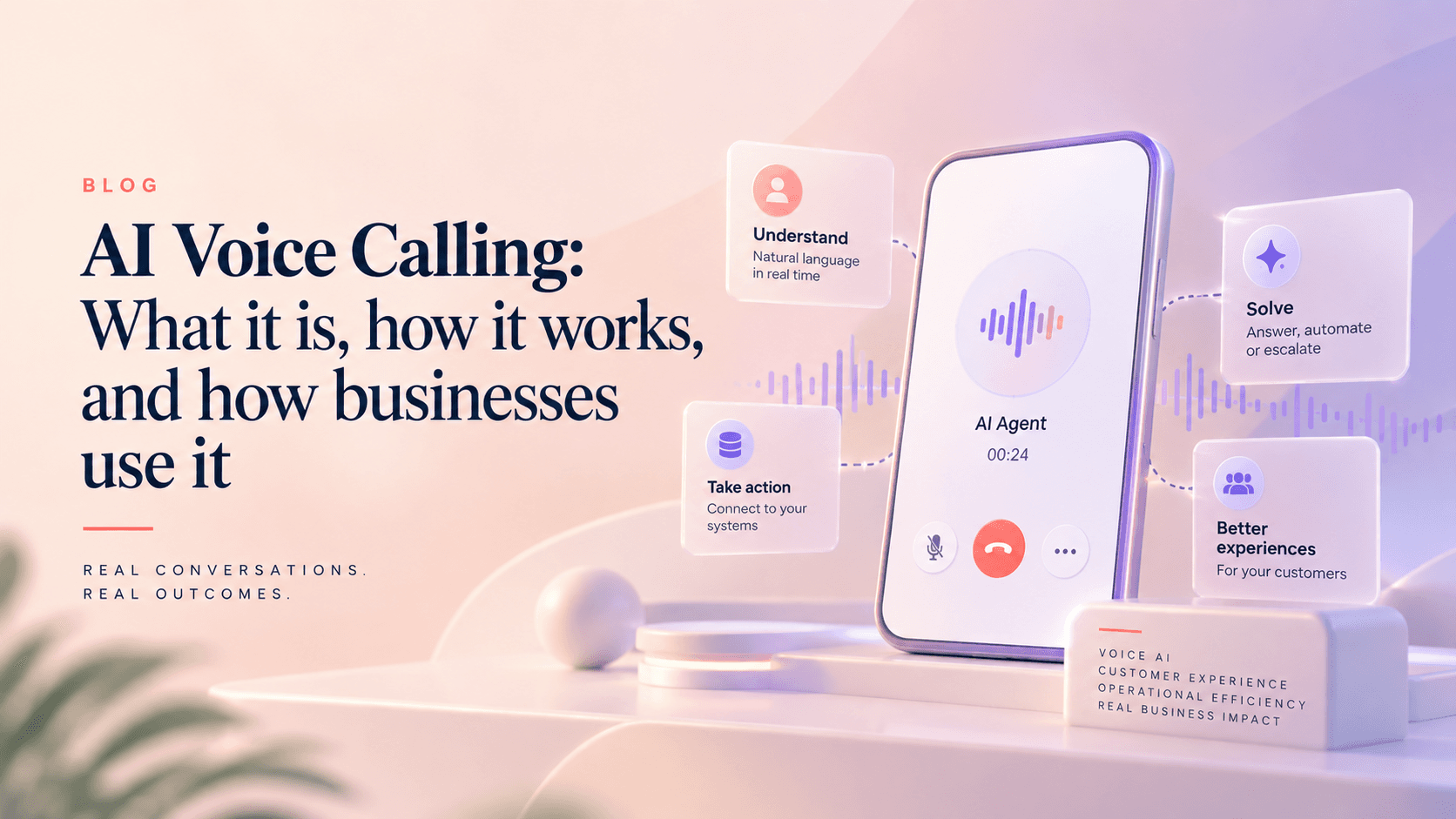
AI Voice Calling: What it is, how it works, and how businesses use it
Learn what AI voice calling is, how AI phone calls work, where businesses use them, and what to consider when deploying AI calling at scale.